Healthcare · Pharma · AR · 2019 to 2020
Roche MEBMS
Medical Expert by my Side: building nurses' confidence for a complex MS infusion
What I owned
- Design sprint leadership
- UX concept
- Field research
- Stakeholder alignment
- AR experience
- Design system
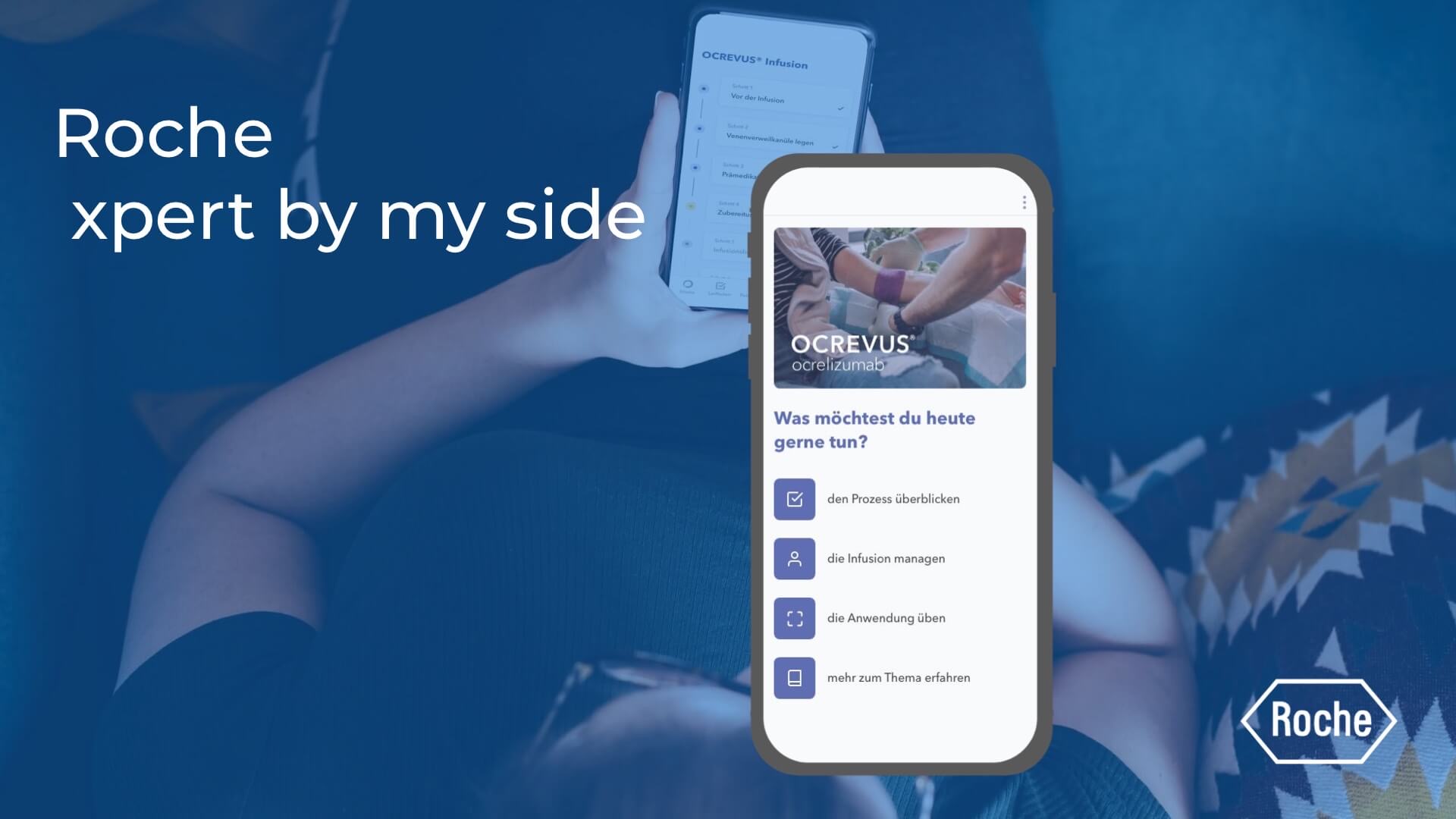
Training confidence for a complex infusion
OCREVUS is a Roche treatment for multiple sclerosis, given as an infusion that takes the best part of a working day. The nurses and physician assistants who administer it carry real responsibility, yet many only do it occasionally and learn from dense printed handbooks.
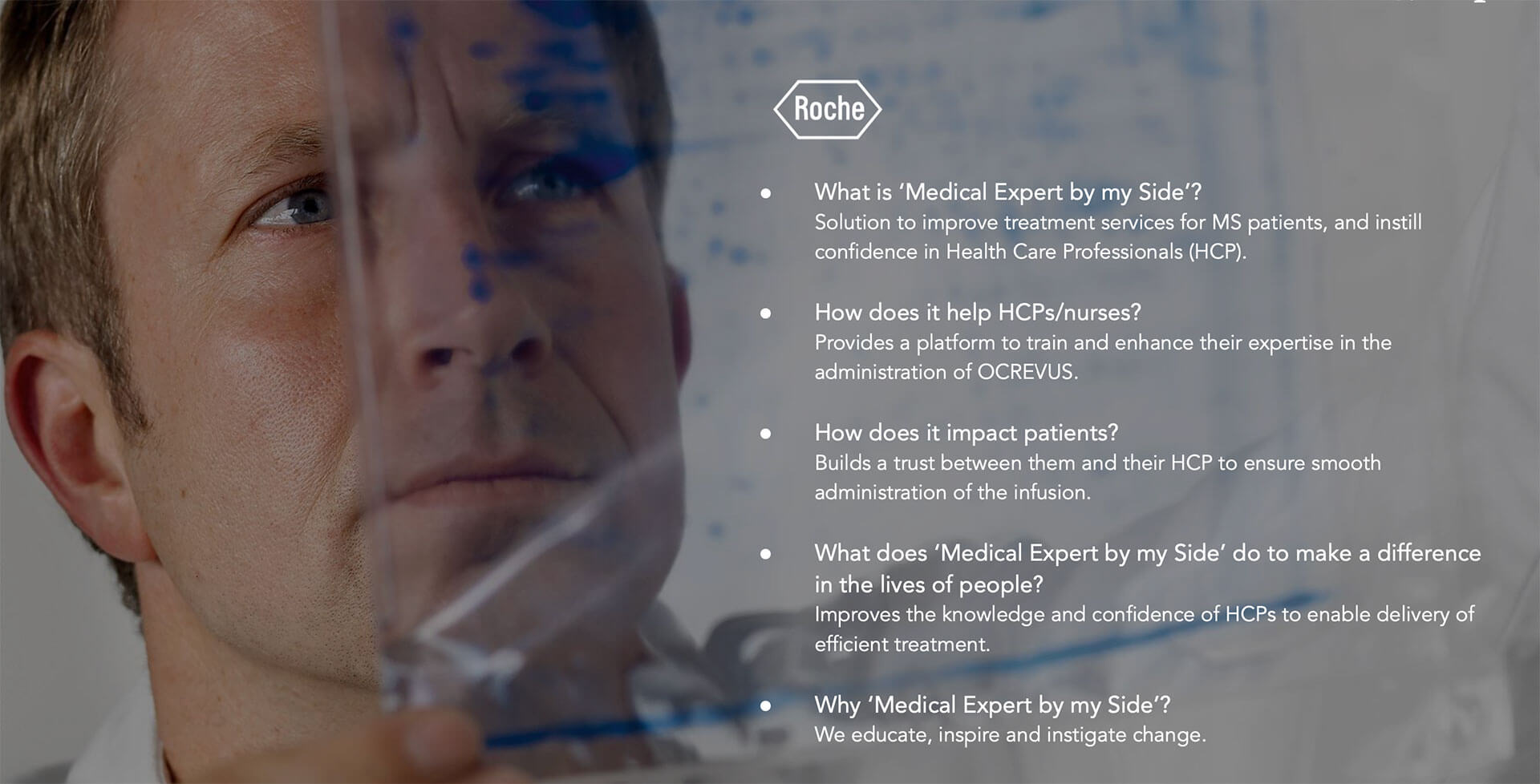
Medical Expert by my Side set out to change that: build trust, confidence and collaboration between healthcare professionals and patients, using technology to educate, inspire and instigate change. Roche, Strategy& and the PwC Experience Center kicked the project off together in November 2019.
Building trust, confidence and collaboration between HCPs and patients using technology to educate, inspire and instigate change.
Project manifesto
Little exposure means no routine
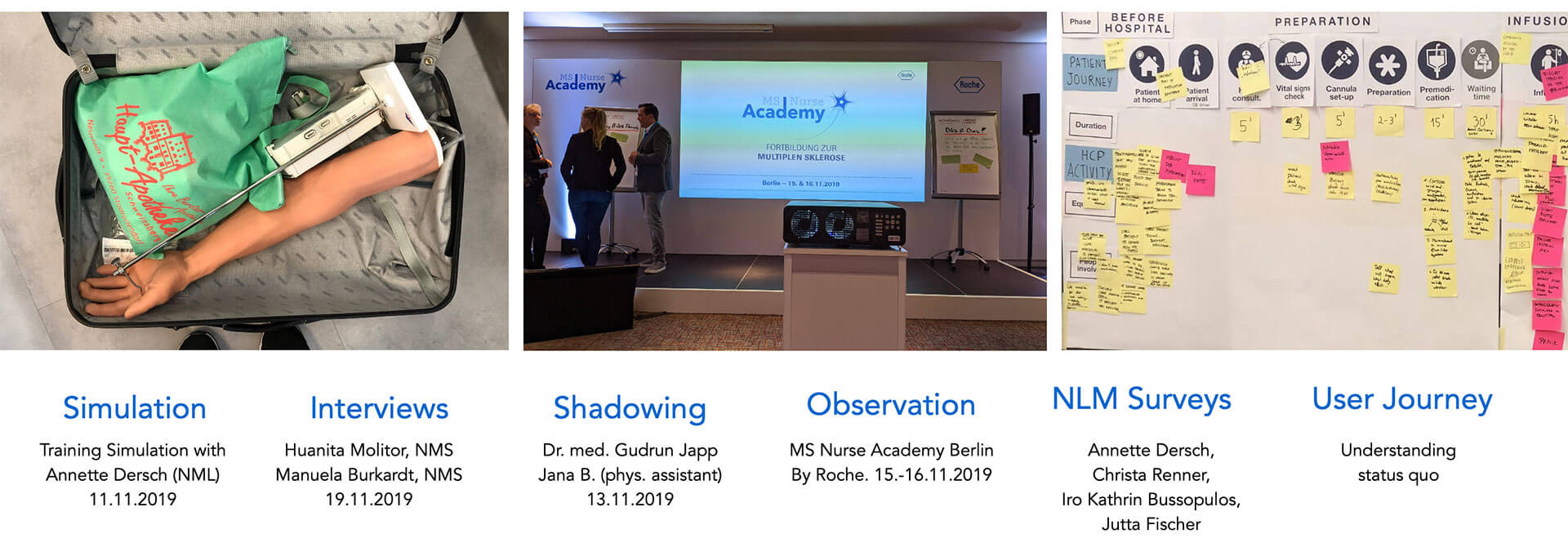
We shadowed infusions, ran a training simulation, interviewed nurses and specialists, observed the MS Nurse Academy in Berlin and surveyed Roche's nurse liaison managers. Four themes came through clearly.
Confidence varies
Academic backgrounds differ. Physician assistants are stronger at office and patient management, nurses are hands-on, and some people play down their insecurities when watched.
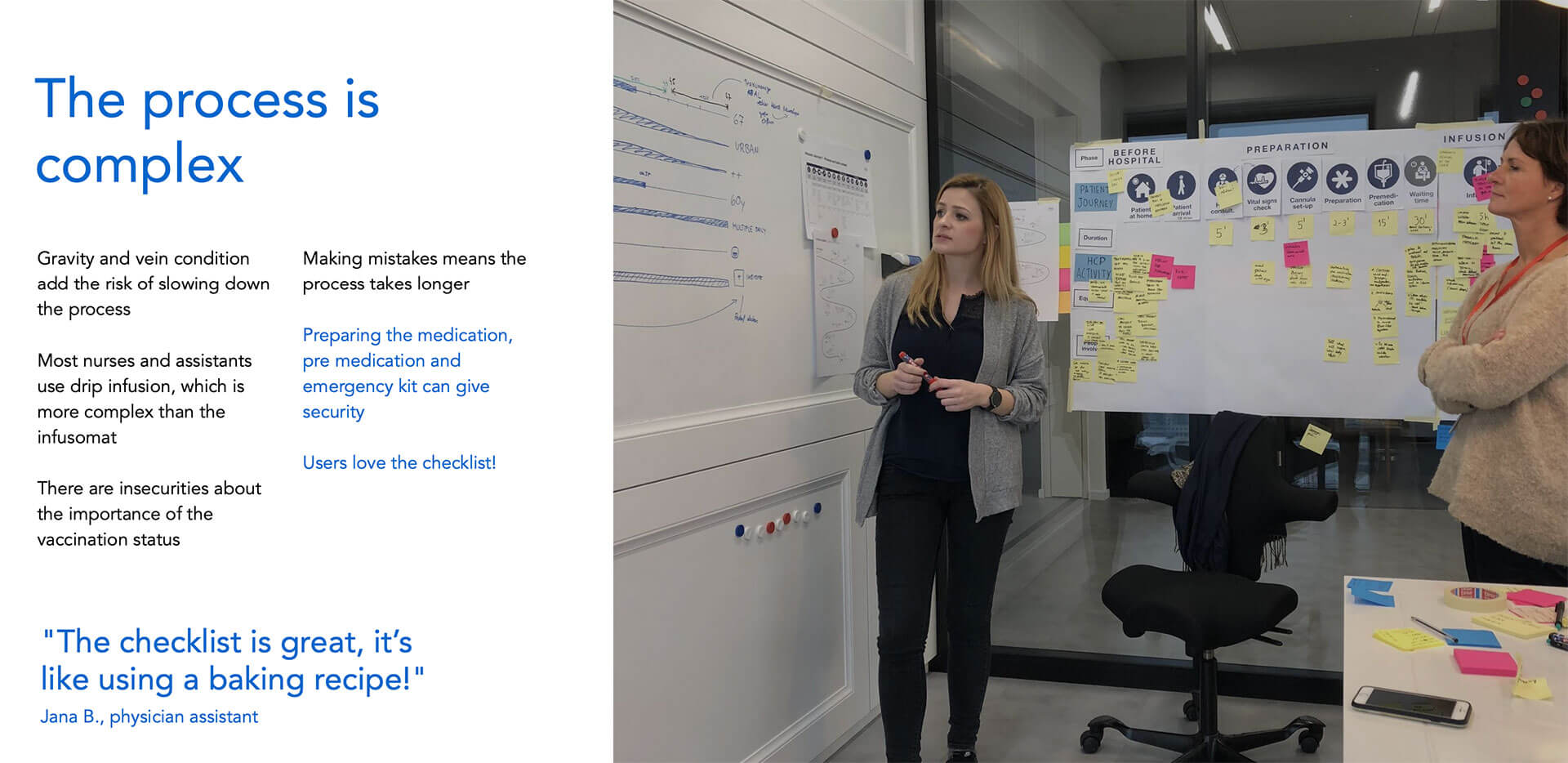
The process is complex
Gravity and vein condition can slow an infusion, drip infusion is harder than an infusomat, and every mistake makes the day longer.
No routine
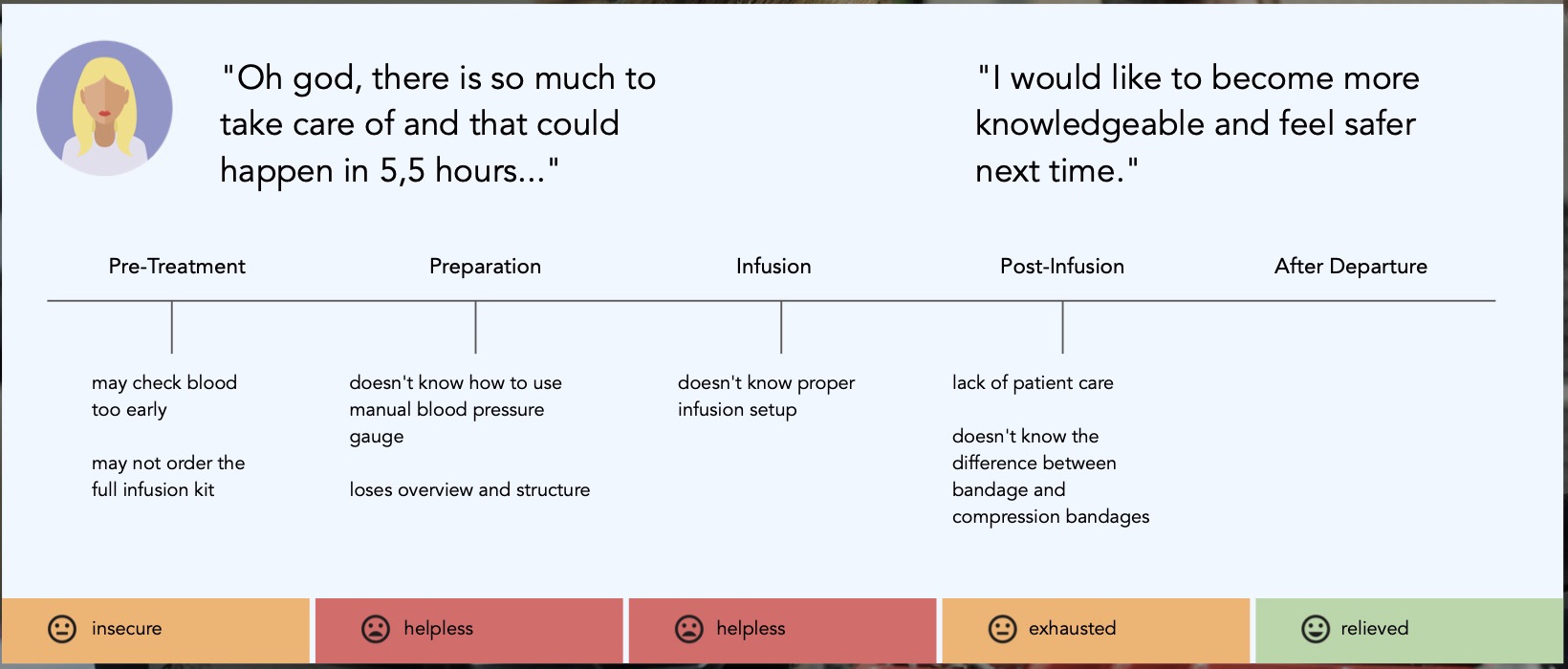
People forget steps they don't do often, have little time to train during working hours, and many don't know how to handle an emergency such as anaphylactic shock.
The environment matters
Busy offices distract, parallel tasks interrupt the process, and tools for patient management vary from office to office.
Due to lack of exposure and infrequent training opportunities, young physician assistants and experienced nurses have difficulties applying OCREVUS. They are not able to amass the organisational and practical skills required to administer the infusion with confidence.
Problem statement
Lead the sprint, win the room, ship the concept
As Product Design Lead at PwC Digital, I led the design side of a five-week sprint, from field research to a tested prototype and a full set of design assets ready for development.
A big part of the job was leadership outside the design team. Roche's management favoured familiar formats like e-books and video and was sceptical of AR. My role was to bring them along with evidence rather than argument.
Worked with
- Project manager
- Service designer
- UX designer
- UI designer
- Strategy& consultants
- Developers
Sprint leadership
Shaped the plan across Understand, Create and Iterate, with clear milestones and outcomes for each week.
Stakeholder buy-in
Ran demonstrations and product experience workshops that turned scepticism about AR into support.
Concept to assets
Led the UX concept, AR use cases, design system and app screens through to a prototype for development sprints.
Understand, create, iterate in five weeks
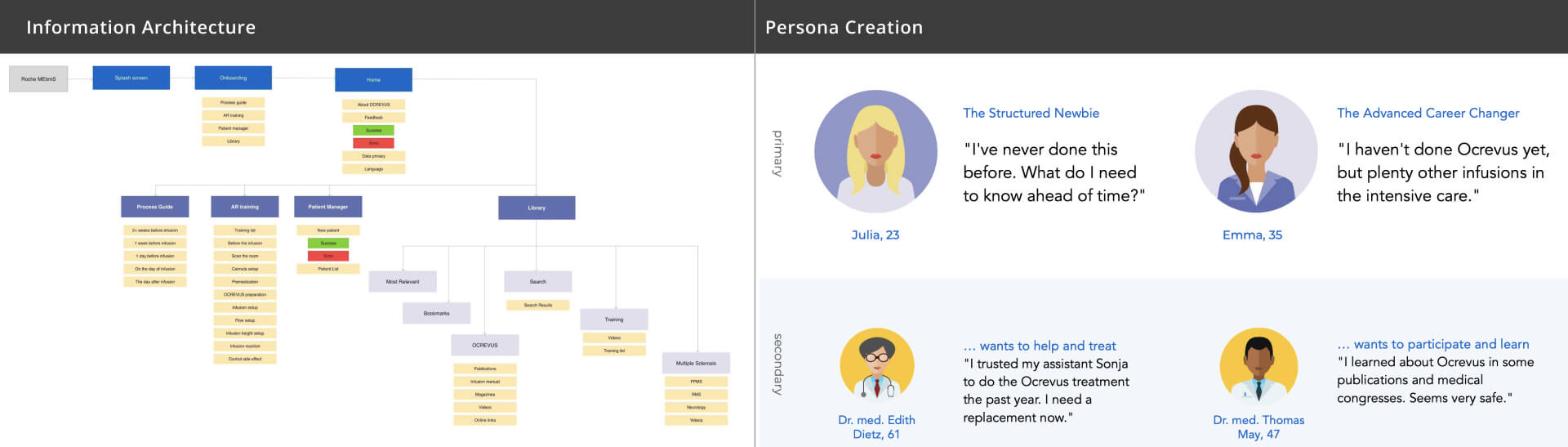
We designed for two primary personas: Julia, 23, a structured newbie who has never given the infusion, and Emma, 35, an experienced intensive care nurse who is new to OCREVUS. Their doctors, who delegate the treatment, were secondary users.
Rather than digitising the handbook, we set four goals for the tool, and tested every idea against them.
- Understand
- Simulation, interviews, shadowing, observation, surveys and a status-quo journey
- Insights, personas and a problem statement
- Create
- Storyboards of the key infusion moments
- Role play with a real-size AR setup
- Concept pillars ideated and expanded
- Iterate
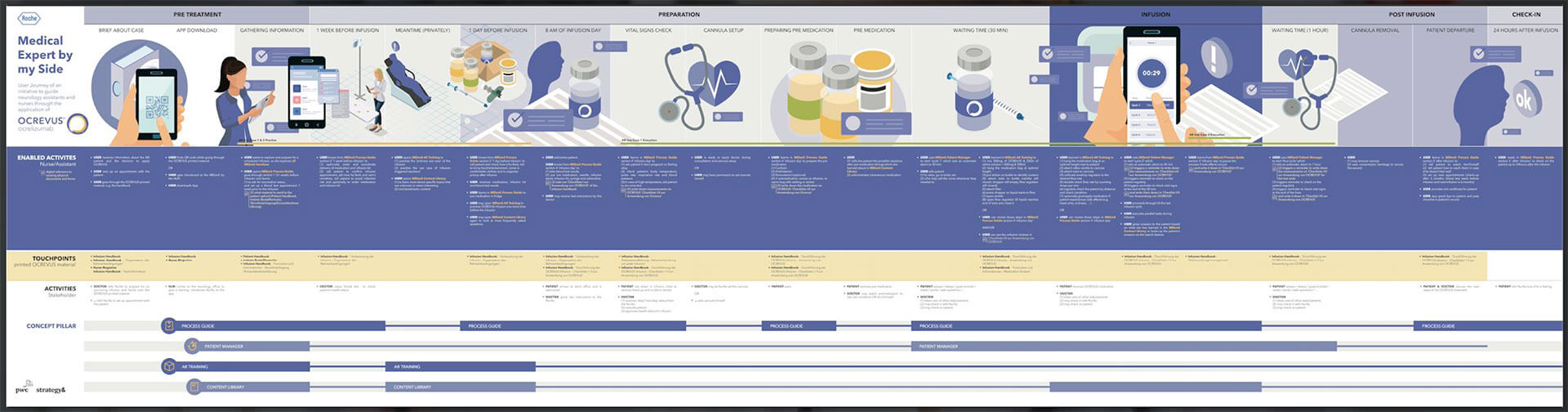
- Future user journey and information architecture
- First user testing and critical feedback
- Finalise
- Refined concept and design assets
- User testing and a working prototype
- MVP planning for development sprints
Concept goals
Increased confidence
Fill gaps in awareness, knowledge and experience, let people ask specific questions privately, and teach how to handle emergencies.
Simplified complexity
Explain the factors that influence the process, and the ways to make it more efficient.
More routine
A training opportunity that is valuable, always accessible and enjoyable to revisit.
Support during busy times
Condensed content to refresh knowledge, and help keeping track when things get busy.
Calls that shaped the concept
The phone, not wearables
AR on a device everyone already owns removed the barrier management worried about most.
Structure by frequency of use
The tools people need most often sit closest to hand.
Less content, not more
We cut the handbooks down to the steps that matter, and moved the rest into a searchable library.
Let users make the case
Management watched real users with the prototype instead of hearing us argue for AR.
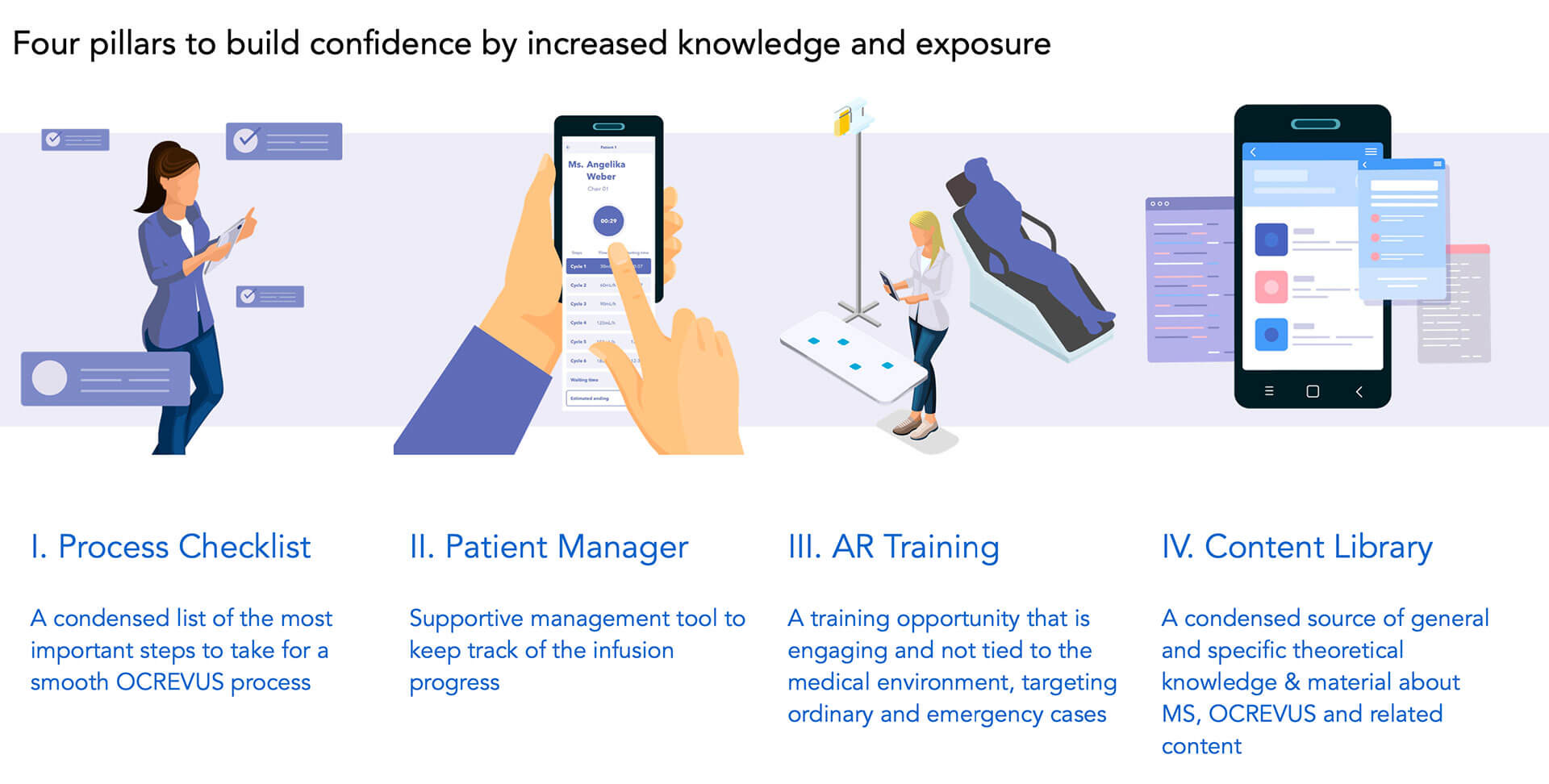
Four pillars, organised by how often you need them
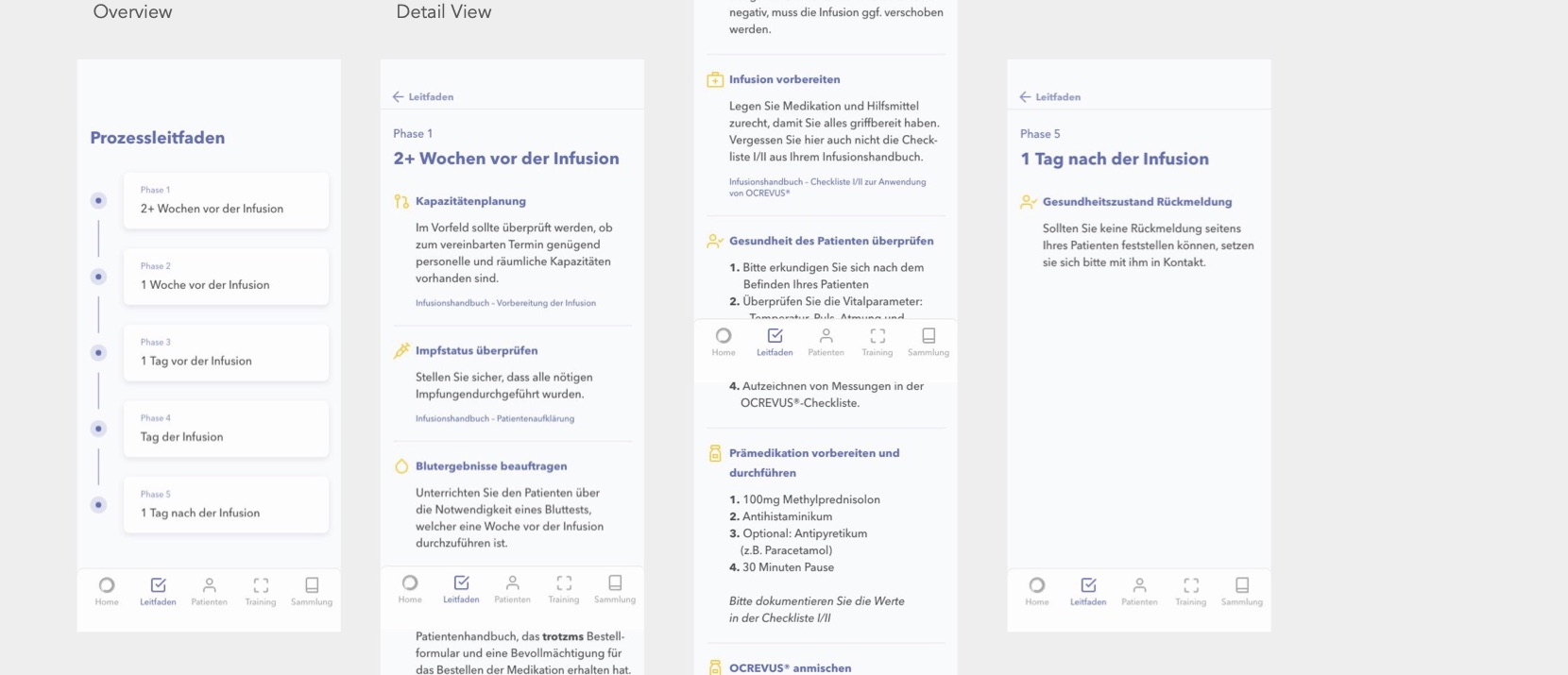
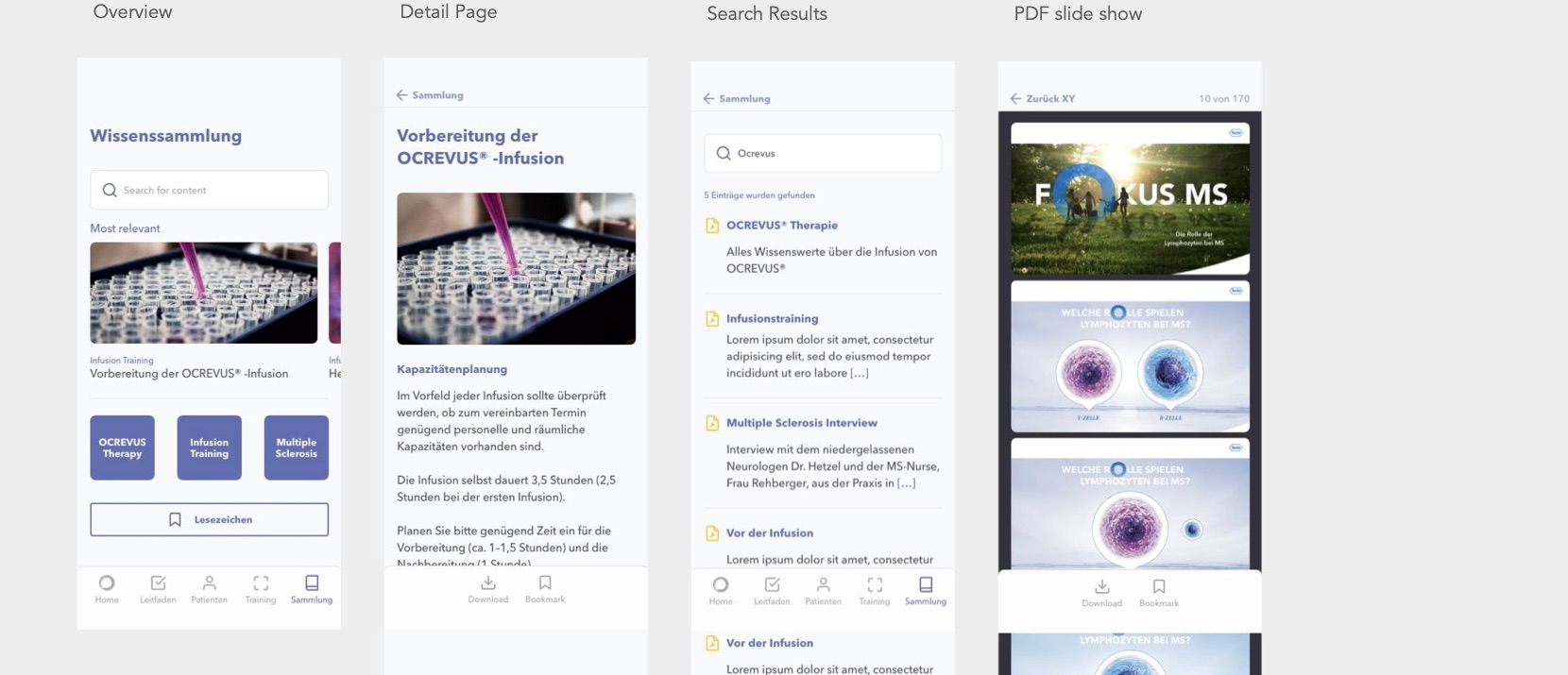
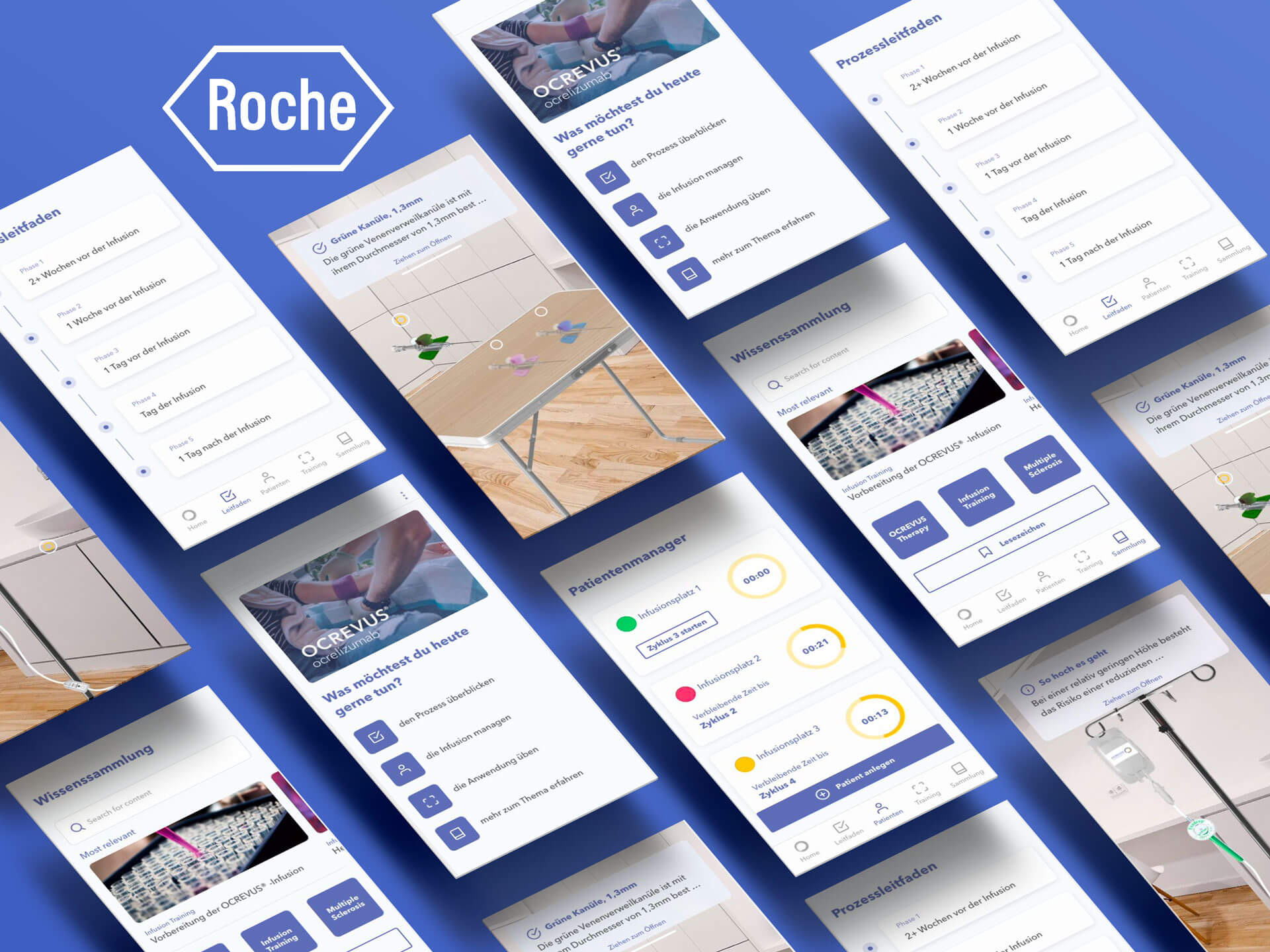
The concept is structured by frequency of use, so the tool you need most is always closest to hand. AR is reached through the phone everyone already has, and through physical cards in the infusion handbook or shared by nurse liaison managers, linking printed and digital material.
I. Process checklist
The most important steps for a smooth infusion, used several times before each one to refresh knowledge.
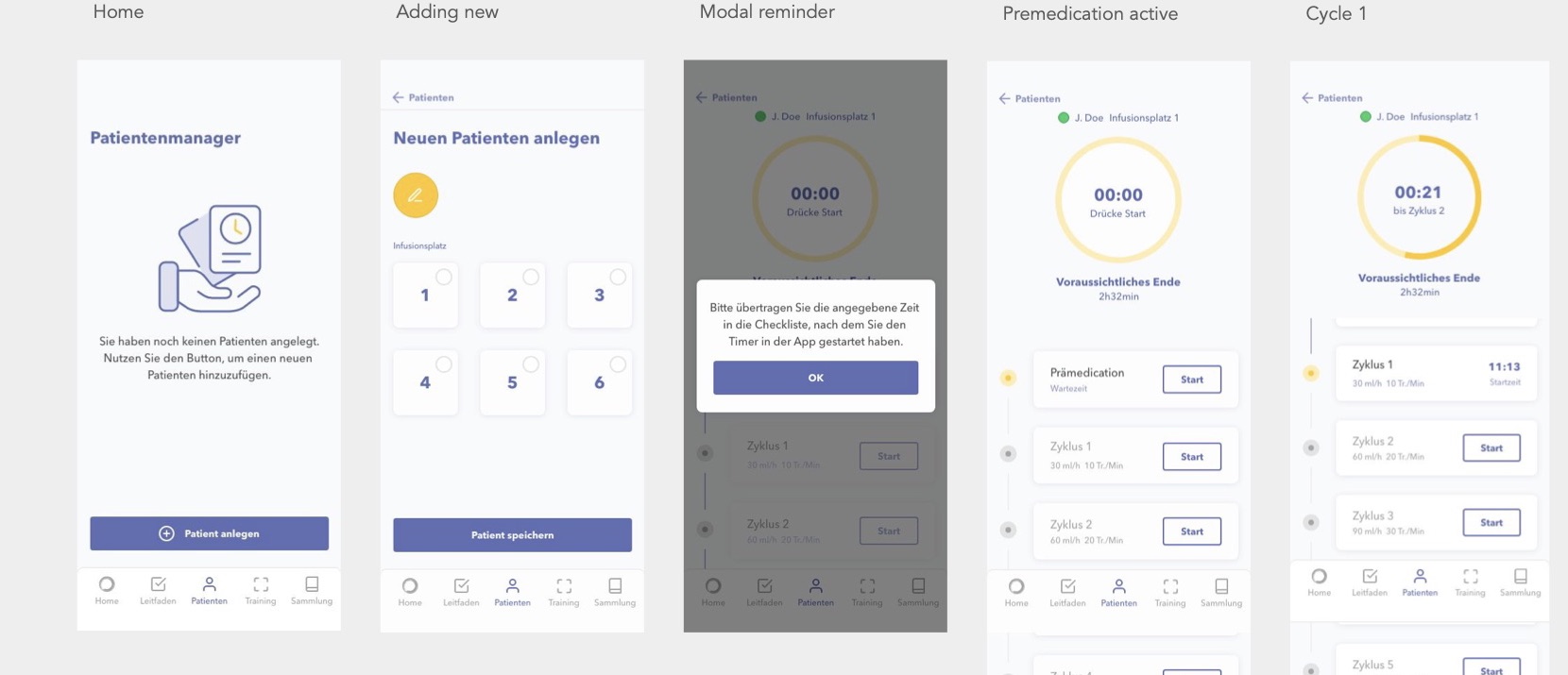
II. Patient manager
Tracks every infusion in progress, with timers for premedication and each cycle, used every time an infusion runs.
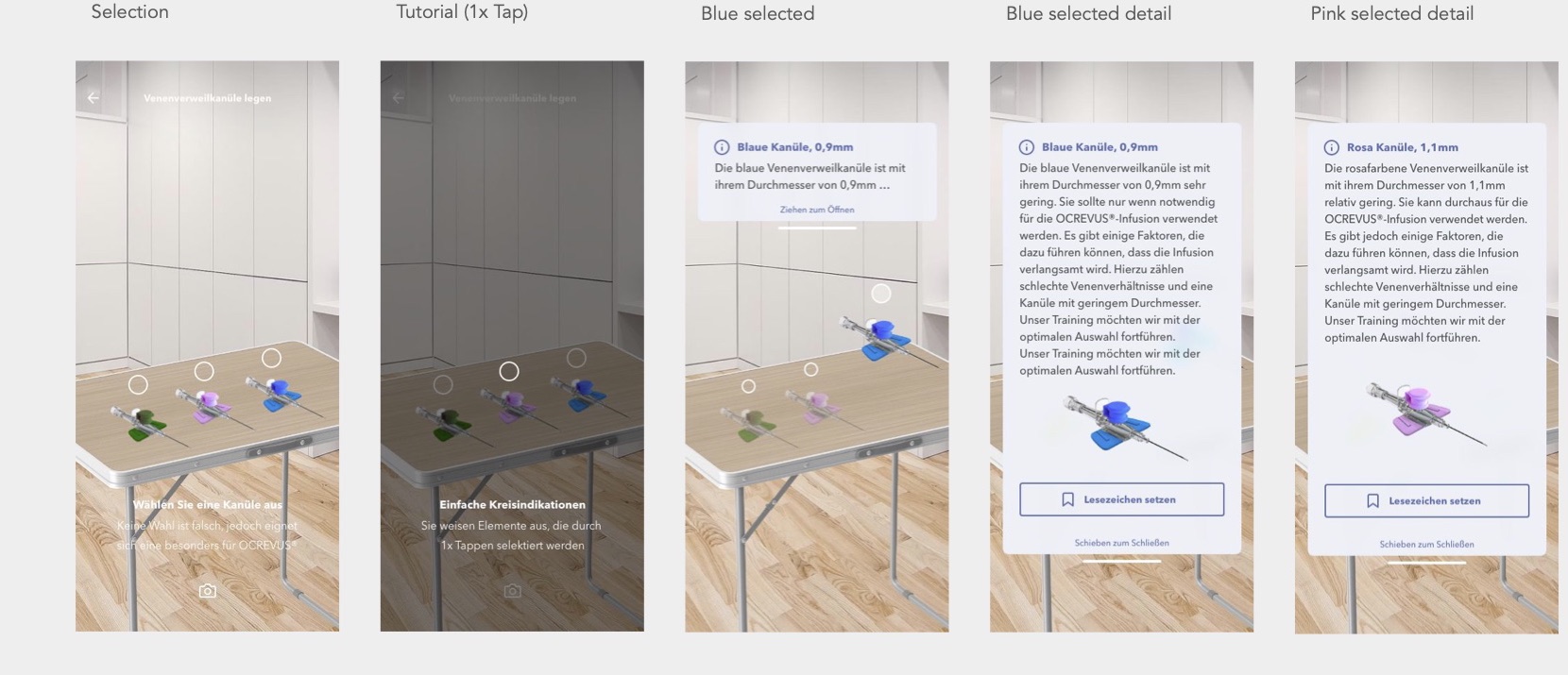
III. AR training
Practise anywhere, away from the clinic, for initial training and to refresh past experience.
IV. Content library
Condensed theory on MS and OCREVUS, to build fundamental knowledge and answer specific questions.
Two AR use cases
The ordinary infusion
Choose the right cannula, give the premedication, mix OCREVUS, set up the infusion and set the rate, with guidance at every step.
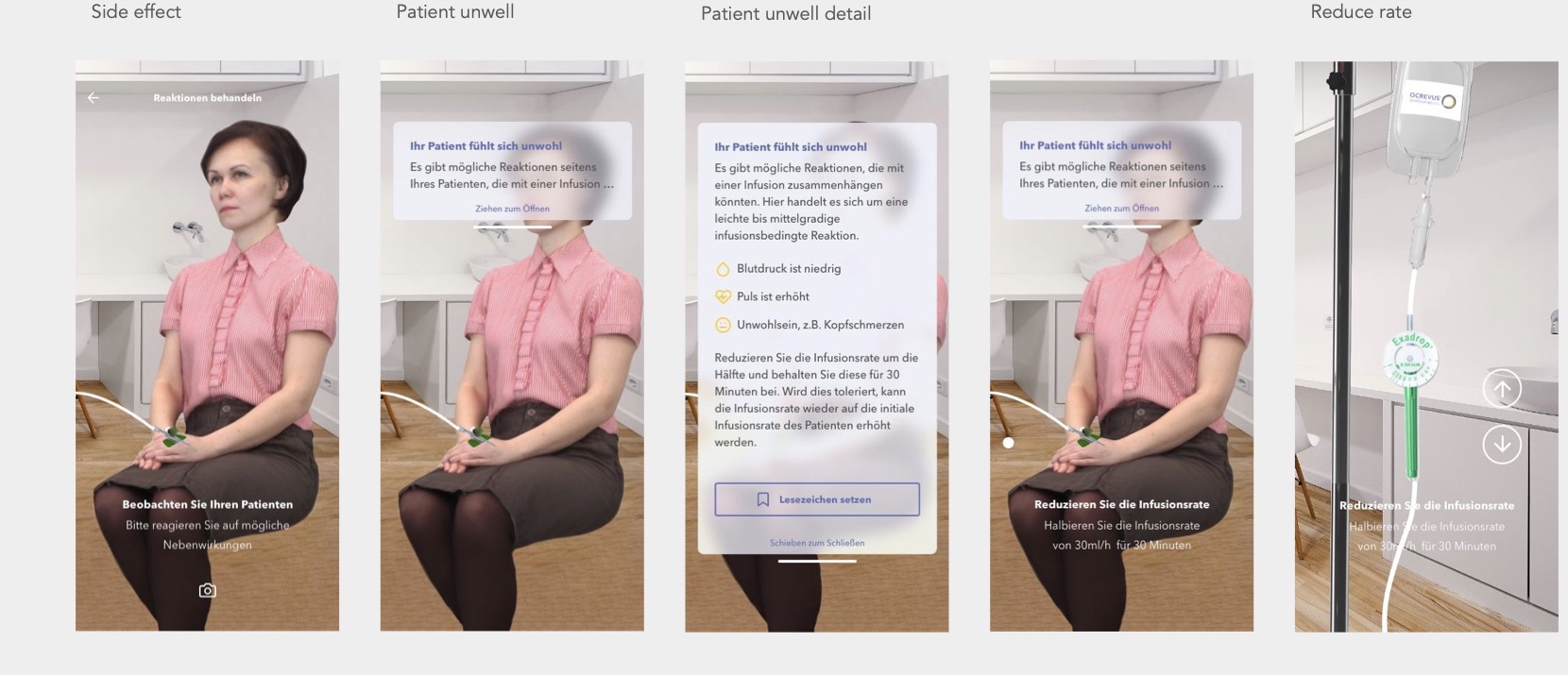
The emergency case
Recognise an infusion-based reaction, know what it means, and practise reducing the rate and continuing safely.
A calm companion on Roche's light branding
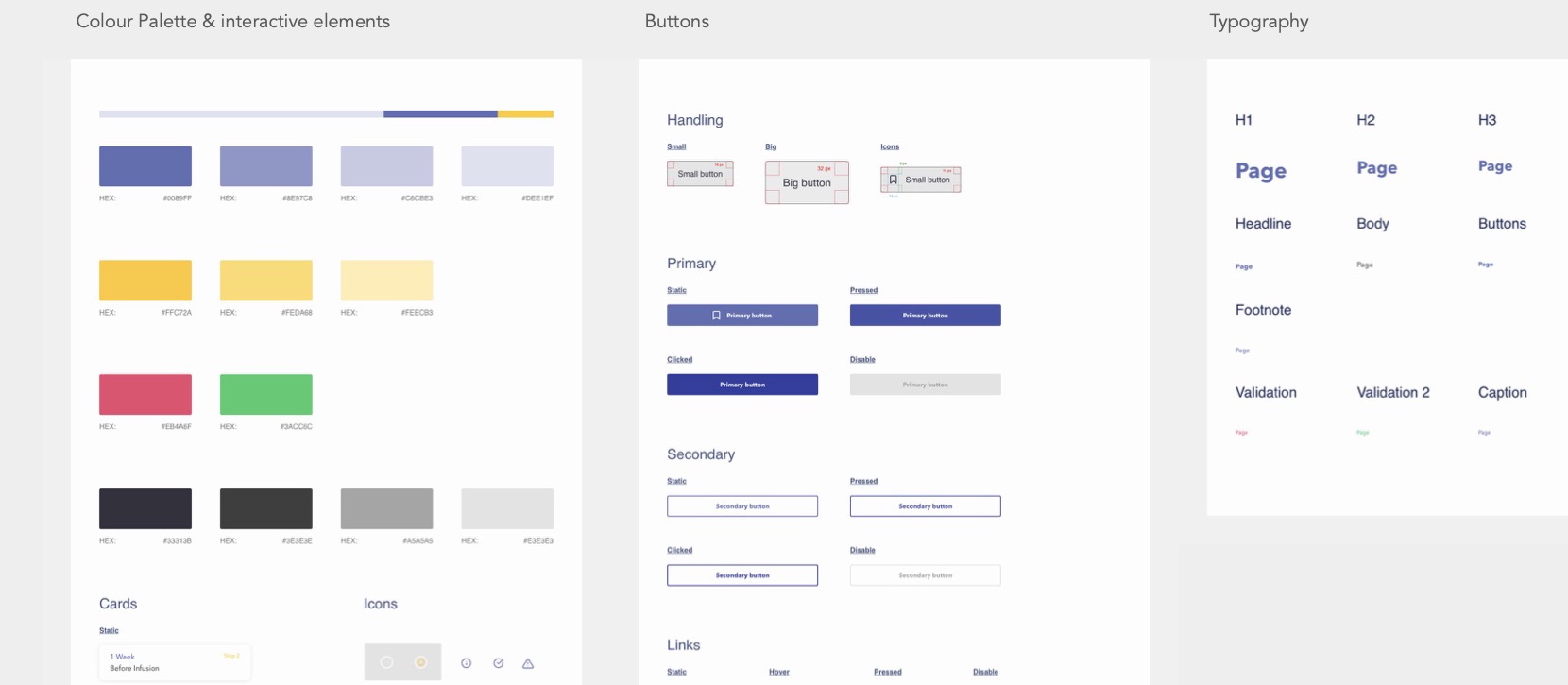
We adapted and expanded Roche's light branding system into a design system of colour, typography, buttons and cards, and designed the app in German for its first users.
Nurses who can administer without fear
The sprint delivered a tested concept, a working prototype and a complete set of design assets, with features estimated for the first development sprints. In user sessions that Roche's management watched, people responded strongly to AR and remembered the steps better than with video or e-books.
Scepticism turned into support
A management team that wanted e-books backed an AR-led concept after seeing real users with it.
Ready for development
Concept, prototype, design system and 3D asset plan handed into MVP planning.
The training tool has helped nurses understand the process with ease and are able to administer without fear.
Sales Head, Roche Pharma R&D
When stakeholders doubt a new technology, don't argue for it. Put it in front of real users while they watch. Evidence moved this project further than any presentation could.
Next project
Payspoon →